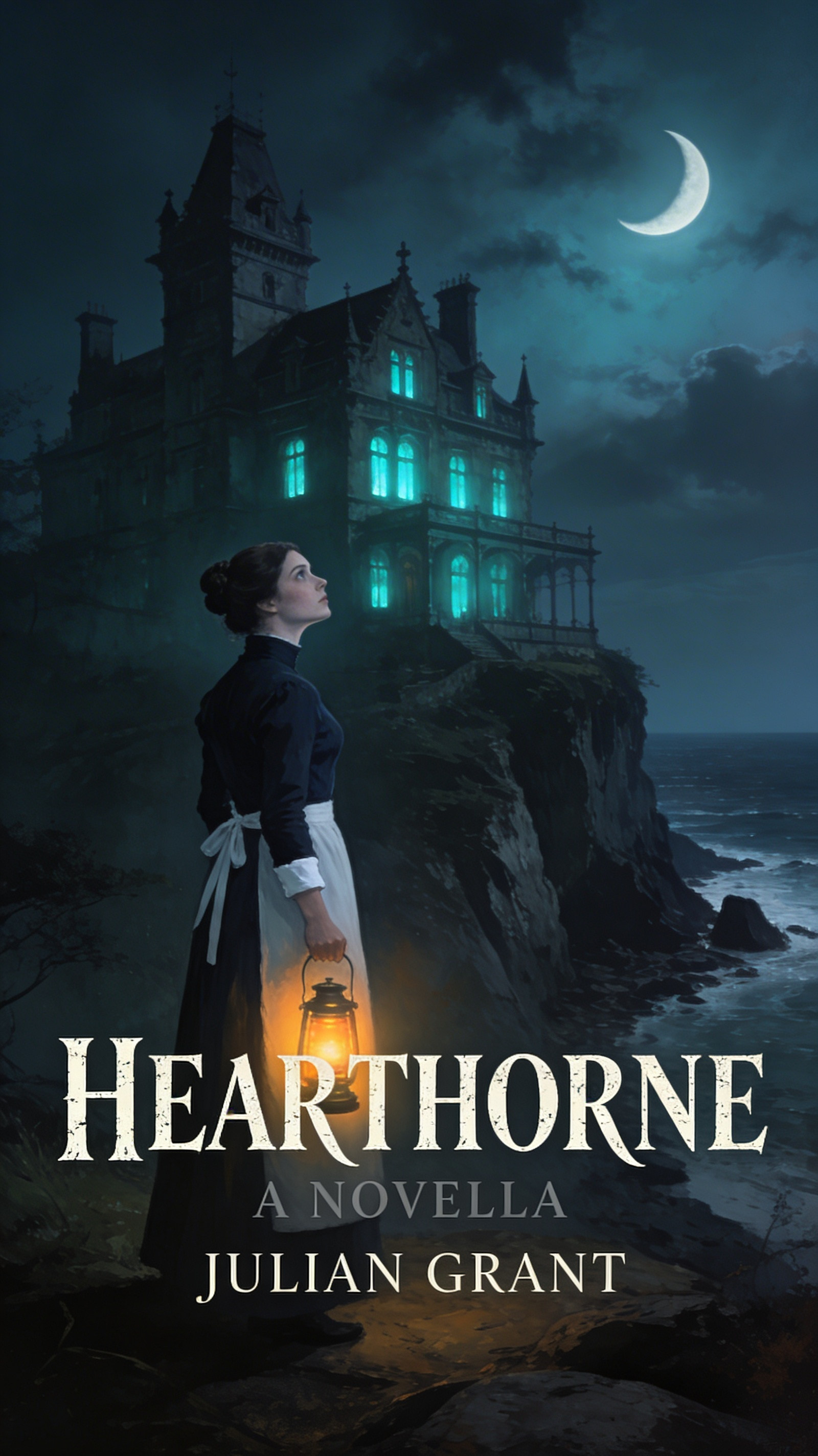

Final Investigations, 1924-1935
DOCUMENT 1: OBITUARY
The Times (London)
March 8th, 1924
OBITUARY: Miss Eleanor Margaret Ashford, 1848-1924
Miss Eleanor Margaret Ashford, distinguished nurse and devoted advocate for medical education, died peacefully on March 6th at her residence in Bloomsbury. She was 76 years of age.
A graduate of Miss Florence Nightingale's nursing academy in 1871, Miss Ashford dedicated her life to patient care and the advancement of nursing as a respected profession. Over her fifty-three-year career, she served in numerous London hospitals and private practices, earning the respect and admiration of colleagues and patients alike.
Miss Ashford was known for her compassionate care, her insistence on rigorous hygiene standards, and her patient mentorship of younger nurses entering the profession. She published several articles on nursing practice in medical journals and served on the committee of the Royal College of Nursing from 1916 to 1922.
Colleagues remember her as tireless in her dedication, possessing both scientific rigor and genuine warmth. "Eleanor never met a patient she could not comfort or a student she could not teach," noted Dr. James Morrison of St. Bartholomew's Hospital, where Miss Ashford served for thirty years.
Miss Ashford never married, devoting herself entirely to her vocation. She is survived by her sister, Mrs. Margaret Fenwick of Surrey, and numerous devoted friends and former students.
Her contributions to nursing in London will not be forgotten. Funeral services will be held at St. Pancras Church on March 12th. In lieu of flowers, the family requests donations to the Nightingale Fund for nursing education.
DOCUMENT 2: FIELD JOURNAL
Research Journal of Dr. Sarah Chen, Anthropology Department, Cambridge
Hearthorne Site Investigation, July 1935
July 15th, 1935
Arrived at Hearthorne ruins this morning. The site is even more desolate than photographs suggested. Sixty-four years since the fire, and nothing has been rebuilt. The foundations remain, partially overgrown with bramble and ivy. The wine cellar entrance is collapsed but navigable with caution.
Local residents were... reluctant to discuss the site. The publican in the village warned me against going there. "Nothing good in those ruins," he said. "Best leave it alone." When I pressed him, he mentioned "The Guardian" with the kind of conviction usually reserved for genuine belief rather than folklore.
I'm beginning to understand why previous researchers abandoned their investigations here.
July 16th, 1935
Spent the day reviewing documents in the Cambridge archives. The story is more complex than I initially understood.
Timeline reconstructed:
- 1843-1871: Pattern of young women arriving, "drowning" in lake (30 documented cases)
- November 1871: Hearthorne burns; Lady Soames and Benjamin Wrexham confirmed dead along with Headsman Jarvis Winterbottom
- 1872-present: No further disappearances; site abandoned. Expedition in 1891 shows no significant findings in manor remains. Theft of recording equipment attributed to locals.
Key finding: Benjamin Wrexham's memorial stones. Thirty stones for thirty women over thirty years. One woman every year.
This was not accidental drowning. This was systematic.
Cross-referenced with other coastal sites showing similar patterns:
- Innsmouth, Massachusetts: Multiple disappearances, 1840s-1920s; site raided by federal authorities 1928
- Brighton, England: Unexplained disappearances near certain beaches, 1800s-present
- Approximately 47 other coastal locations globally showing similar characteristics
I'm no longer investigating an isolated incident. I'm documenting one node in a vast network.
July 17th, 1935
Descended into the wine cellar passages today. I should not have gone alone. Professional error. But I had to see.
The passages extend far deeper than the architectural plans suggest. Natural limestone caves were modified and expanded. They slope downward at a consistent angle, heading toward—and beneath—the lake.
The air grows noticeably colder as you descend. There's a smell of salt water and something else. Something organic. Decay, perhaps, though I could not identify the source.
I heard water moving in the depths. Not the sound of an underground stream, but something larger. Something... breathing? I cannot find better words for it.
I retreated after approximately 200 meters. The passages continued far beyond what my electric torch could illuminate.
July 18th, 1935
Found the messages today.
Near the wine cellar entrance, carved into the limestone walls and on slate fragments deliberately placed for discovery. Multiple messages, different dates based on erosion patterns and carving technique. The earliest appears to be from the 1870s or 1880s. The most recent... much more difficult to date.
Message One (carved in relatively clean letters, estimated 1870s-1880s):
PATTERN BROKEN HERE
NOVEMBER, 1871
THIRTY TRANSFORMED
ELEANOR LIVED
Message Two (cruder carving, estimated 1890s-1900s):
I GUARD
I WAS BEATRIX CHALMERS
I AM THE GUARDIAN
Message Three (very crude, deeply carved as if by immense force, date uncertain):
I REMEMBER
STILL
Message Four (most recent, letters barely recognizable as human script):
I AM GUARDIAN
The implications are staggering. Someone—something—has been leaving these messages over decades. The progressive deterioration of script quality suggests either advancing age and debility, or physical transformation making writing increasingly difficult.
"Beatrix Chalmers" appears in historical records. Listed as drowned December 20th, 1870. Memorial stone placed by Benjamin Wrexham. But these messages suggest she did not die. She transformed. She chose to remain below as a guardian.
For sixty-four years? For sixty-five years since her transformation?
What would sixty-five years in those passages do to a human being? Assuming she was human to begin with, after whatever "transformation" occurred.
July 19th, 1935
Researched the name "Eleanor Ashford" today. No connection to Hearthorne in any official records, but I found her obituary in The Times archive.
She died March 6th, 1924. Age 76. Natural causes.
Fifty-three-year career as a nurse. Respected. Beloved. She lived a full life in London, apparently never knowing she had been marked for something else.
The messages mention her. "Eleanor Ashford lived." As if this single fact justifies everything else.
I'm beginning to think it does.
July 20th, 1935 – Morning
Last night I heard something from the passages.
I was cataloguing the slate fragments by lantern light when I heard it—a voice, if something so distorted can be called a voice. It came from deep within the passages, echoing up through the limestone. Not words, exactly. More like the memory of words. The shape of language without meaning.
But I understood it anyway. Don't ask me how. I simply understood.
"Guardian. Remember. Still guard. Still remember why."
I left immediately. Packed my equipment. Returned to the village inn. I will not go back into those passages.
July 20th, 1935 – Afternoon
Final notes before I leave Hearthorne tomorrow.
I've spent three weeks researching what I can only describe as a global pattern of... I hesitate to use the word, but "worship" seems appropriate. Ancient entities. Pre-human. Dwelling in deep ocean trenches, in subterranean lakes, in places where water meets darkness.
The academic literature is scattered and often dismissed as folklore. But patterns emerge:
The Deep Ones: Marine entities, amphibious, older than human civilization. Served by human priestesses called "brides" who undergo transformation. References appear in:
The Pattern: Certain individuals marked for transformation. Usually women. Usually "touched by water" in childhood. Drawn to coastal sites. Called into the depths. Transformed over time into something between human and entity. Serve as priestesses, facilitators, brides.
The Sites: Nodes in a global network. Hearthorne was one. Innsmouth another. Brighton. Approximately 47 others I've identified. Possibly more. Each site had—or has—its priestess. Each site marks and transforms women in the same pattern.
Hearthorne's pattern broke in 1871. Benjamin Wrexham and seven transformed women attacked the site, killed the priestess, saved the thirty-first bride. But they couldn't destroy the entity itself. The passages remain. The deep places remain.
So, one of the transformed women stayed. Chose to become guardian. To prevent new priestesses. To keep the pattern broken at this specific site.
For sixty-four years, something has guarded Hearthorne. Prevented new transformations. Maintained the break in the pattern.
But at what cost?
The messages grow progressively less human. The voice I heard last night was not human. Whatever Beatrix Chalmers was in 1871, she is no longer that. Time and water and proximity to the entity have transformed her into... what? Guardian or priestess? Protector or servant? Both?
Lady Soames served as a willing priestess. Beatrix has served sixty-four years as unwilling guardian. How much longer can she maintain the distinction? How much humanity remains?
The messages suggest she remembers why she stays. That memory seems to be her anchor. As long as she remembers that one life was saved, that the sacrifice mattered, she remains guardian rather than priestess.
But memories fade. Time erodes everything. Someday she will forget. Someday she will become what Lady Soames was.
Or perhaps she already has, and simply doesn't realize it.
July 20th, 1935 - Evening - Final Entry
I am leaving Hearthorne tomorrow. I will not return.
My research confirms what I suspected: the pattern is vaster than any one site, older than human civilization, persistent beyond our capacity to end it. The entity at Hearthorne is one of many. Destroying Hearthorne didn't destroy the pattern. It continues in Innsmouth, in Brighton, and in places without names.
But something did change here in 1871. Benjamin Wrexham and seven transformed women broke the local pattern. They saved Eleanor Ashford. They prevented the thirty-first bride. They died knowing they couldn't destroy the entity, only contain it.
And someone—something—still guards the passages. Still prevents new priestesses. Still maintains the break in the pattern.
Whether that guardian is hero or monster, whether it protects us or merely serves a different purpose, I cannot say with certainty.
Perhaps both are true. Perhaps in cosmic horror, all guardians eventually become the thing they guard against. Perhaps Beatrix Chalmers has become indistinguishable from Lady Soames, and the only difference is that she still remembers—barely—why she chose to stay.
But this I know: Eleanor Ashford lived.
She lived seventy-six years. She never knew she was marked. Never knew she was saved. Never knew seven women and one dying man fought so she could live ignorant and free.
She had a career. She helped people. She was respected and beloved. She died peacefully, surrounded by friends, her life complete.
In a cosmos of indifferent gods and eternal patterns, that matters.
One life saved. One pattern broken. One small victory against vast horror.
It is not enough. It will never be enough. The Deep Ones persist. The patterns continue. Other Eleanors are being marked even now, in Brighton and Innsmouth and elsewhere. The entity beneath Hearthorne still exists. Other entities exist in other places. The cosmic horror is real and eternal and utterly indifferent to human suffering.
But here, at Hearthorne, the pattern broke. And something guards the ruins to keep it broken.
I choose to see that as victory. However small. However costly. However ambiguous the nature of the guardian that maintains it.
Some doors should remain closed. Some guardians should remain undisturbed.
Some victories, however pyrrhic, should be honored.
Recommendations for Cambridge Department:
- Site should be officially designated restricted
- No further investigations recommended
- Local warnings should be heeded
- Whatever guards the deep should be left alone
- This report is to be filed but not published
I am leaving. I will not return.
May whatever guards the deep remember why it chose to stay.
May Eleanor Ashford's peace remain undisturbed.
May the pattern stay broken, whatever the cost.
—Dr. Sarah Chen
Cambridge University
July 20th, 1935
DOCUMENT 3: FINAL FRAGMENT
Carved in limestone, discovered 1967 during geological survey
Location: Hearthorne wine cellar, deepest accessible point
Letters crude, deeply incised, estimated mid-20th century
STILL REMEMBER
I AM GUARDIAN
[Geological Survey Note, 1967: The passages extend far deeper than this point, but become flooded and inaccessible beyond approximately 300 meters. Sonar suggests extensive cave system beneath the lake, possibly connecting to the Irish Sea. Something large was detected moving in the deep water during our survey. We did not investigate further. Site sealed and marked hazardous. —Dr. R. Patterson, British Geological Survey]
###




Your layered documents create a chilling sense of historical depth and inevitability, making the horror feel both intimate and cosmic at once; do you see the Guardian as ultimately resisting the Deep Ones indefinitely, or slowly becoming another link in the very pattern she’s trying to break?