
Author's Note
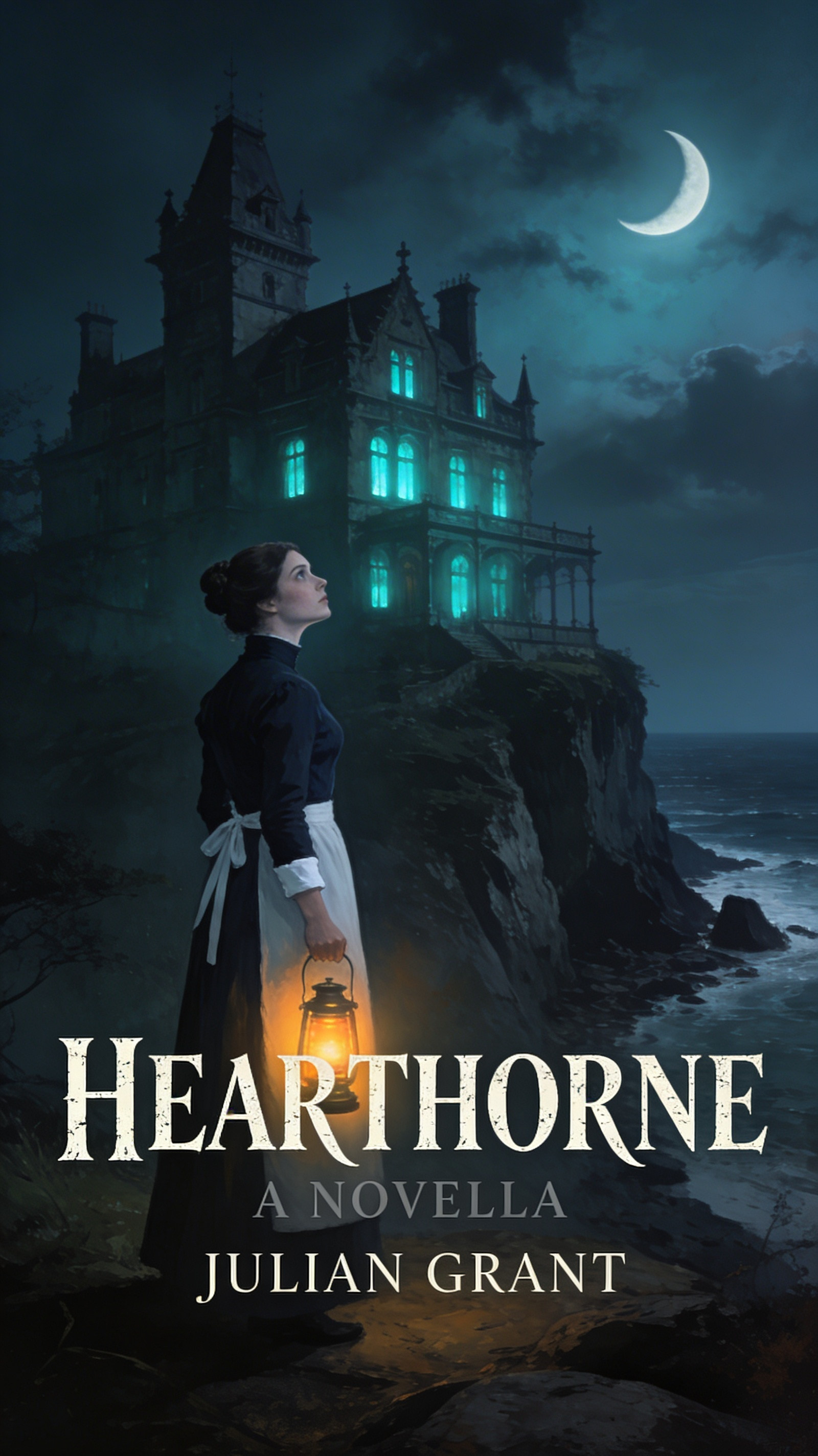
Hearthorne began, as most haunted things do, with a question I couldn't answer.
I wanted to know what happened to the women who weren't rescued. Not the ones spirited away at the last moment, not the ones whose screams summoned help — the ones who went all the way in, who were changed beyond recognition, and who remained conscious anyway. Gothic fiction is full of their silhouettes. I wanted to hear their actual voices.
The epistolary format chose itself. Letters, journals, medical notes, and testimonies are the records of people who needed to be believed. Beatrix Chalmers writes because she understands, early, that documentation is a form of resistance. So do Catherine, Ben, Lizette, and Eleanor. The act of writing — of imposing language on experience that is actively dissolving language — is the only rebellion available to them. I hope it reads that way.
A note on the historical record: the 79-year cycle first documented here did not end in 1870. Hearthorne's bones are good. The water has a long memory. Those of you who have reached the final chapter will know that Dr. Chen is still watching. So, in their way, are the women in the deep.
There is more to tell. I intend to tell it.
Thank you for reading.
— J.G.